1h 28min. // A weary French Foreign Legion column tramps back into the port city of Mogador, its soldiers caked in dust and bravado. Among them is Private Tom Brown, a laconic American whose easy charm barely conceals a deep-rooted cynicism. At the same time, a ship docks bearing Amy Jolly, a disillusioned nightclub singer fleeing a mysterious past in Europe, hoping the North African outpost will offer anonymity, if not salvation.
Amy quickly becomes the sensation of a local cabaret, captivating the jaded expatriate crowd with her cool poise and androgynous allure. Onstage in a tuxedo and top hat, she toys with convention, crossing gender lines with a sly smile and a stolen kiss that leaves the room buzzing. In the audience, Tom watches her with a mixture of amusement and recognition, sensing in her the same emotional fatigue that haunts him.
Their paths intertwine in smoky nightclubs and moonlit streets, where flirtation gives way to a fragile, dangerous intimacy. Complicating matters is the presence of the wealthy, worldly Monsieur La Bessière, who offers Amy the one thing Tom cannot: security and a life free from the constant shadow of war. As the Legion is called back to the front and the political tensions of the Rif War close in, Amy is forced to choose between a comfortable future and a reckless, all-consuming love.
Amid swirling desert sands and baroque shadows, their story unfolds as a study in sacrifice and desire. The film builds to an unforgettable final image that crystallizes the central question: how far will a person go, and what will they surrender, for a love that may be doomed from the start?
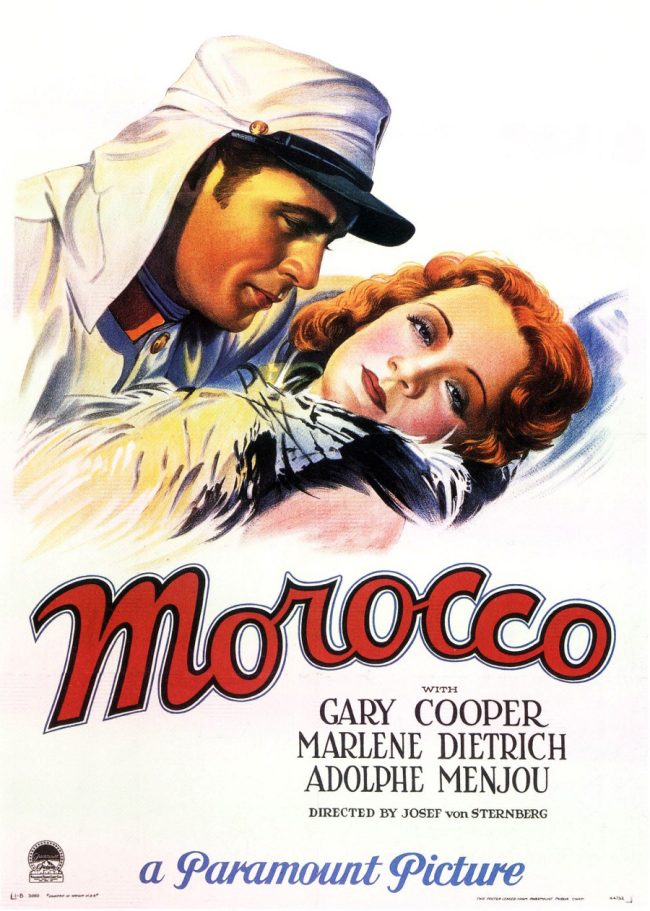
Directed by: Josef von Sternberg
Writing Credits: Jules Furthman, Benno Vigny
Starring: Marlene Dietrich, Gary Cooper, Émile Chautard, Adolphe Menjou, Francis McDonald
*********************
Awards:
WON. National Board of Review: Top Ten Films. Category. Morocco (1930).
Academy Awards. Nominated for Best Actress in a Leading Role (Marlene Dietrich), Best Director (Josef von Sternberg), Best Art Direction (Hans Dreier), and Best Cinematography (Lee Garmes).
United States National Film Registry. Selected for preservation by the Library of Congress as “culturally, historically, or aesthetically significant.”
Photo Gallery: